
How to Transfer a Foreign Car to Spanish Plates – Step-by-Step 2026 Guide

Bringing your car to Spain is one thing – putting it on Spanish plates is another. This guide walks you through when you must re-register, what the steps look like, and how to avoid the most common expat mistakes.
Quick Answer
If Spain becomes your main base, you are expected to put your foreign-registered car on Spanish plates. You'll need a technical inspection, tax payments, DGT registration, and updated insurance – and it pays to plan the process properly before you move.
- If Spain is your main residence, your car should usually be re-registered on Spanish plates
- Key steps: technical inspection (ITV), tax payments, DGT registration, new plates and updated insurance
- You'll need ID, NIE, proof of address, original registration documents and proof of ownership
- Costs can range from a few hundred to several thousand euros depending on the car and taxes
- Using a gestor and an insurance broker helps avoid paperwork errors and gaps in cover
When do you need to change to Spanish plates?
Many expats start out driving their home-country car in Spain "temporarily", then, months later, realise that Spain has quietly become their main base. At that point, the car on foreign plates is no longer just visiting – and both authorities and insurers expect the registration to match the reality.
If you are mainly living in Spain, keep the car here for most of the year, or use a Spanish address for day-to-day life, you should assume that re-registering on Spanish plates will be required. For short stays or occasional trips, leaving the car on foreign plates is often fine – but there is a clear difference between tourism and long-term residence.
Key principle
The registration, insurance and reality of how you live should all line up. If Spain is now your main home, your car should usually be registered and insured here too.
What if Spain is only your second home?
This is where most of the confusion — and most of the trouble — comes from. You have a holiday home, you'd like a car waiting for you here, and you're not a Spanish resident. Two things people get wrong:
- You do not have to become a resident to put the car on Spanish plates. As a non-resident you can import it at your own pace — roughly 180 days, no 30-day clock, no pressure.
- But a car that lives in Spain can't simply stay on foreign plates indefinitely. When you ask your home insurer "how long am I covered in Spain?" they'll quote you a number of days — and people mishear that as "the car can live here." It can't: your home insurer won't cover a vehicle permanently based abroad, and foreign plates aren't a lawful long-term solution. Expats discover this the hard way after a year or two, when a claim is refused or they're stopped.
So if the car is going to be based at your Spanish home, importing it and switching to Spanish plates is the move that actually keeps you covered — and you have a comfortable window to do it in.
Documents you'll need before starting the process
The smoother your paperwork, the smoother the registration. While details can vary by region and origin country, most expats will be asked for the following documents:
1. Personal identification and residency details
- Passport: a clear copy of your valid passport.
- NIE: your foreigner identification number in Spain – often essential for tax and registration.
- Proof of address: rental contract, property deeds or recent utility bill showing your Spanish address.
- Empadronamiento (sometimes): proof you are registered at your local town hall, required in some municipalities.
2. Vehicle documentation from your home country
- Original registration document: V5C, Fahrzeugbrief, or equivalent, in your name.
- Proof of ownership: purchase invoice or contract, especially if you recently bought the car.
- Technical details: documentation that clearly lists engine size, CO₂ emissions, weight and model variant.
- Certificate of conformity (CoC): often required to show the car matches EU technical standards.
3. Insurance and inspection related documents
- Current insurance: information on your existing policy and claims history, helpful when switching to Spanish insurance.
- Previous roadworthiness tests: if applicable, for context when scheduling your first ITV in Spain.
Pro tip
Before you put the car on a ferry or transporter, scan all documents and store them somewhere safe. Replacing documents while abroad is possible, but slow and stressful.
Step-by-step: how to register a foreign car on Spanish plates
The exact order can vary depending on your region and whether you use a gestor, but most expat cases follow a similar sequence. Here is a simplified version of the typical process:
Step 1 – Technical inspection (ITV)
The first major step is usually a technical inspection (ITV) to confirm that the vehicle meets Spanish roadworthiness and, where relevant, local technical standards. You can find your nearest ITV station on the official government portal: ITV information and station map (administracion.gob.es). During this step:
- The inspector checks brakes, lights, tyres, emissions and general condition.
- Any modifications (tow bars, headlights, suspension changes) may require additional documentation or approval.
- If the car passes, you receive an ITV card and sticker. If not, you'll need to fix the issues and return.
Step 2 – Calculate and pay registration tax (impuesto de matriculación)
Registration tax is the biggest and least predictable cost. It is linked to CO₂ emissions and the vehicle's value — but the rates and reliefs vary enormously between autonomous communities. Some regions charge substantial tax on the same car that another region, under certain conditions, taxes at zero. Because of this, any "typical" figure is misleading, so we deliberately don't quote one here — get a case-specific estimate before you commit.
You declare and pay this tax before registering the car. The official process and forms are here: vehicle import/registration tax (administracion.gob.es). When you move your habitual residence to Spain and bring the car as part of your personal belongings, a tax exemption may apply if you meet strict criteria and deadlines — a gestor or tax advisor can confirm whether you qualify.
Step 3 – Pay local road tax (impuesto de circulación)
Your local town hall (ayuntamiento) charges an annual local road tax. You'll need to pay this for the municipality where the car will be registered and mainly kept. Proof of payment is usually required for registration at DGT.
Step 4 – Submit documentation to DGT and register the car
Once you have: ITV passed, registration tax paid, local road tax paid, and all vehicle and personal documents in order, the final step is to register the car at DGT (Dirección General de Tráfico) — you submit everything from the previous steps here. The official DGT registration procedure is at DGT ordinary registration (sede.dgt.gob.es). Here:
- You submit the complete documentation set or your gestor does it on your behalf.
- DGT validates the paperwork and assigns a Spanish registration number.
- You pay the DGT registration fee and receive documentation confirming the new plates.
Step 5 – Order plates and update your insurance
With your new Spanish registration number, you can order physical plates from an authorised supplier. At the same time, you will need to inform your insurer of the new details or move to a Spanish insurer if you haven't already done so.
From this point, your car is considered a Spanish vehicle, and you are expected to maintain valid ITV, local road tax and insurance in line with Spanish rules.
Costs to expect when transferring a foreign car to Spanish plates
Every case is different, but it helps to plan with a broad cost framework in mind. Common cost elements include:
- ITV inspection (for import): €100–€250 — this includes the inspection for registration and the fee for issuing the Spanish technical sheet (ficha técnica).
- Registration tax (impuesto de matriculación): the big variable, and one we won't put a figure on — it swings from zero (some regions, under conditions) to a large sum depending on the car's emissions and value and your autonomous community. Get a case-specific estimate rather than trusting any published range.
- Local road tax: depends on the municipality and vehicle, often from around €50–€200 per year.
- Gestor fees: if you use a professional, expect a few hundred euros for handling the full process.
- Number plates: a relatively small cost but should be budgeted for.
- Modifications or repairs: to pass ITV or adapt the car to Spanish standards (for example, lights or emissions-related work).
Reality check
For some cars, especially older or high-emission models, the total cost of registration may be higher than expected. Before committing, it's smart to get a realistic estimate – sometimes selling the car at home and buying locally in Spain is more economical.
Insurance considerations during and after registration
Insurance should not be an afterthought. It needs to align with each stage of the process so that you don't accidentally drive uninsured or assume cover that isn't really there.
Before registration
While the car is still on foreign plates, your home-country insurance may offer limited temporary cover in Spain – but this is usually designed for tourism, not permanent relocation. If you are unsure, ask your insurer in writing what is and isn't covered.
During the transition — the green-plates route
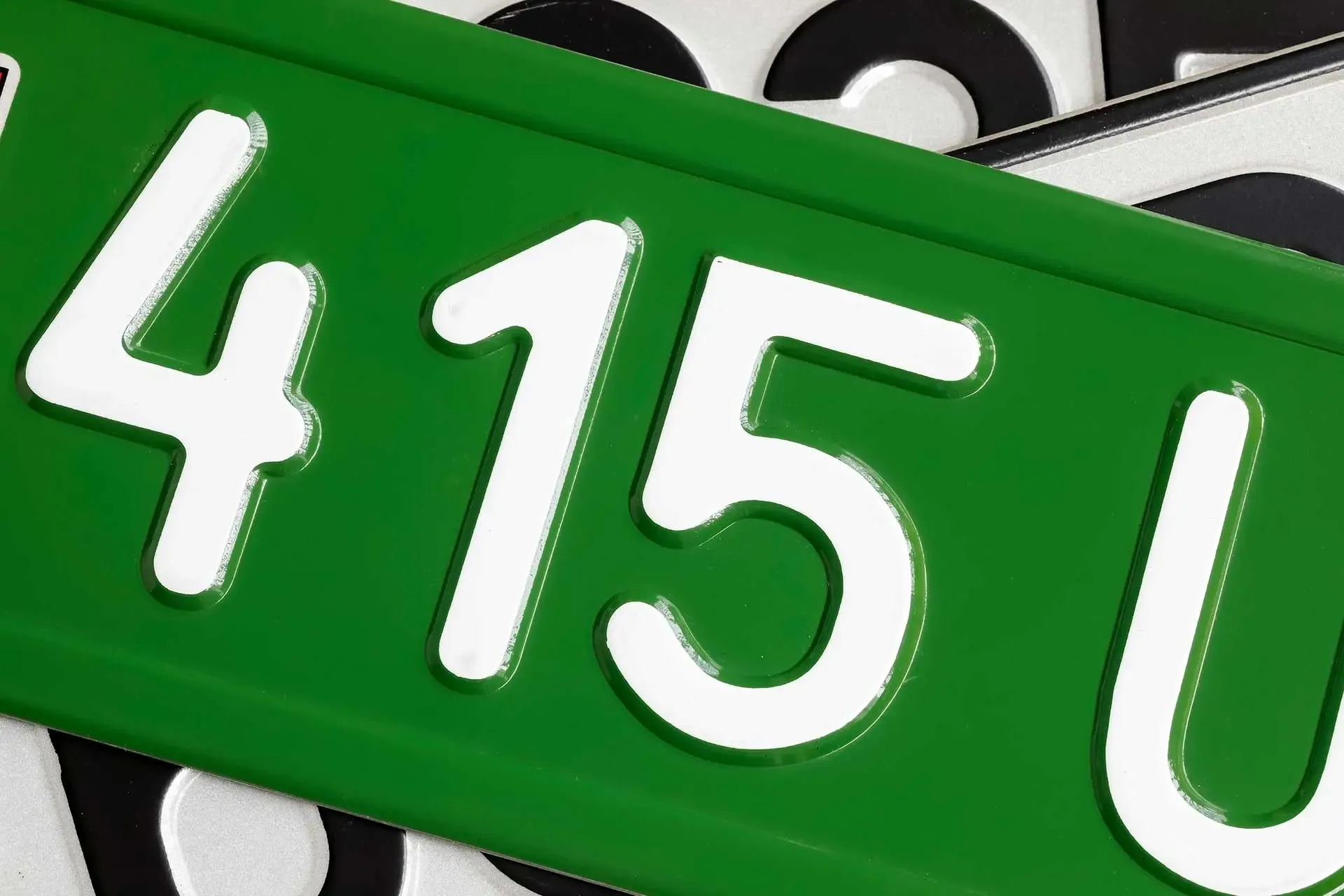
Spanish insurers cannot put a policy on your foreign plates. What they can insure is the temporary green plates (matrícula temporal) your car runs on while the import is being completed. We insure the green plates from day one, so you drive legally throughout registration — then we convert that same policy to your definitive Spanish plates once they're issued. One policy, continuous cover, nothing paid twice, and no reliance on a foreign policy that may already be running down its 90-day clock.
After registration
Once the car has Spanish plates, it should be insured with a Spanish policy that matches your usage: how often you drive, where the car sleeps, who drives, and your claims history. This is where we arrange the right policy for you—finding a combination of price and cover that fits your new life in Spain.
Thinking about bringing your car to Spain?
Before you spend money on ferries, transport and registration, it's worth knowing the full picture: approximate taxes, paperwork, and what your ongoing insurance might look like. We help expats every week with exactly these questions.
Tell us a bit about your car and your plans, and we'll give you an honest view of the options – including whether it makes sense to bring the car at all.
Written and reviewed by licensed insurance agents.
Written and reviewed by licensed insurance agents Maya Kallio and Marco Elsinger, who have helped over 15,000 expats in Spain since 2012.
Maya Kallio
Licensed Insurance Agent · Since 2012
Marco Elsinger
Licensed Insurance Agent · 10+ years
Languages: English, Finnish, Spanish, German, Swedish · DGSFP License: C0031B93323293
Frequently asked questions
Still have questions? Check these answers or get in touch.
Do I have to change my foreign plates to Spanish plates?
If you become a Spanish resident, yes — and you have 30 days to do it. If Spain becomes your main country of residence or you keep the car in Spain most of the year, the car must be registered on Spanish plates. For short visits and tourism, foreign plates are fine; a non-resident holding an NIE (e.g. a second-home owner) can keep foreign plates up to 183 days per calendar year. Once you are resident, the 30-day clock applies.
How long can I drive a foreign-plated car in Spain if I move here?
It depends on your status. If you are a Spanish resident, you have 30 days to re-register the car on Spanish plates — there is no longer grace period for residents. If you are a non-resident who simply holds an NIE (for example because you own a second home), the car may stay on foreign plates up to 183 days per calendar year. But watch the insurance clock: your home-country insurer usually only covers you abroad for around 90 days, and many drop you to third-party only after 30, so cover often runs out well before the 183-day legal limit.
Can I get Spanish car insurance before changing the plates?
No — Spanish insurers cannot issue a policy on a foreign-plated car. While the car is still on foreign plates, it is covered only by your home-country insurer (within their time limits). The Spanish route runs through the import itself: once the car is on temporary green plates (matrícula temporal) during registration, we can insure it and then simply convert that same policy to your definitive Spanish plates — one policy, no gap, no double cost. You'll also need an NIE, which is required for any Spanish vehicle policy.
What documents do I need to transfer my car to Spanish plates?
Typically you need: passport, NIE, proof of address in Spain, the original registration document from your home country, proof of ownership (invoice or purchase contract), a valid ITV or technical inspection, a certificate of conformity if required, and proof of tax payments. Exact requirements can vary depending on the origin country and vehicle age.
How much does it cost to register a foreign car in Spain?
Costs vary widely depending on the type of car, emissions, age, and whether you qualify for any tax reductions. You should budget for: technical inspection (ITV), registration tax (impuesto de matriculación), local road tax (impuesto de circulación), number plates, gestor fees if you use one, and potentially modifications to meet Spanish standards. For many expats this can run from a few hundred to several thousand euros.
Is it always worth bringing my car to Spain instead of buying one here?
Not always. For some models, particularly high-emission or older vehicles, the registration tax in Spain can be high enough that importing the car is not economical. On the other hand, if your car is relatively new, efficient and in good condition, importing can still make sense. Before you decide, it's wise to get an estimate of the likely registration tax and total costs.
Do I need a gestor to handle the process for me?
You can technically handle the process yourself, but many expats use a gestor (administrative agent) to deal with paperwork, appointments and tax calculations. For non-Spanish speakers or complex cases, a gestor can save time, stress and multiple visits to different offices. The same applies to insurance – working with us can keep your cover aligned with each step of the process.
What happens to my existing car insurance in my home country?
Once the car is permanently moved and re-registered in Spain, your home-country policy is usually no longer valid. Some policies include limited temporary cover for trips abroad, but they are not designed for permanent relocation. You should inform your current insurer of the move and align the end of that policy with the start of your Spanish cover.
Can I drive my car while the registration process is in progress?
This depends on the stage of the process, the validity of your current registration, and whether you have appropriate insurance. In some cases, you may need temporary plates or specific documentation to drive legally. To avoid gaps in cover or legal issues, coordinate insurance and registration steps carefully with professionals.
Does the car need to pass ITV before it can be registered?
Yes, in most cases a technical inspection (ITV) is required to confirm that the vehicle meets Spanish roadworthiness and, when necessary, local technical standards. If modifications are needed (for example lights, tow bars, or emissions-related items), they will need to be addressed before registration can be completed.
Related guides
You might also find these useful:
Ready to get covered?
When you're ready, explore your insurance options in Spain with us and request a personalised quote in English.
Get car insurance quotes
Tell us about your car and situation – we'll help align your insurance with the registration process in Spain.
Contact us
Not sure whether it's worth importing your car? Send us a message and we'll talk through your options.